Quick Decision-Making Guide: Proven Psychology Hacks for Bus
Quick Decision Making Guide: Proven Psychology Hacks for Busy Professionals
Introduction
Quick decision making guide equips busy professionals with concrete mental tools to choose faster without sacrificing quality. In a world where every minute counts, the ability to act decisively can differentiate high performers from the rest. This article reveals actionable psychology hacks, from metacognition to micro-feedback, that let you cut deliberation time while still landing on sound choices.
Harness Metacognitive Strategies for a Quick Decision Making Guide
Metacognition - thinking about your own thinking - creates a shortcut that trims the decision loop. By explicitly asking “What am I trying to achieve?” before diving into options, you set a clear success metric that filters irrelevant alternatives instantly.
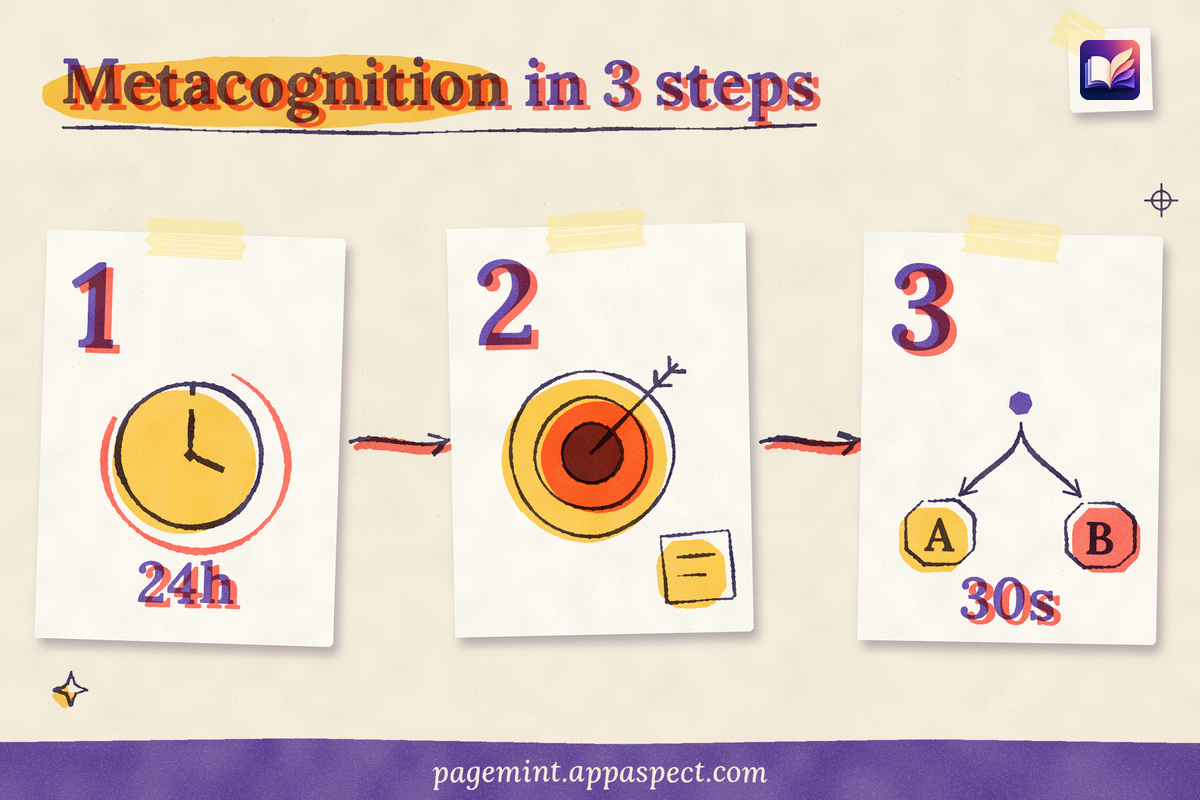
- Set a decision horizon - define the time window (e.g., 24 hours) you’ll allow for the choice.
- Identify the core criterion - pick the single factor that matters most (revenue impact, risk, customer value).
- Run a quick mental simulation - imagine the outcome of the top two options for 30 seconds each.
Why act now? A senior product leader used this three-step metacognitive routine to approve a feature rollout in half the usual time, freeing the team to start development two weeks early.
[!TIP] Write the core criterion on a sticky note; visual cues keep it top of mind during rapid assessments.
Adding a brief reflection after each decision reinforces the habit. Spend two minutes jotting down what worked and what didn’t; over weeks this creates a personal decision log that sharpens future judgments. PageMint’s audio summaries can feed that log with fresh insights, ensuring your metacognitive frames stay current.
Apply Nudge Theory for Immediate Business Choices in Your Quick Decision Making Guide
Nudge theory leverages subtle environmental cues to steer decisions without restricting freedom. In a corporate setting, you can design your workspace and digital tools to make the optimal choice the path of least resistance.
- Default settings - configure project-management software to default to the most efficient workflow template.
- Visual anchors - place a concise KPI dashboard on your monitor’s top corner; the constant reminder nudges you toward data-driven actions.
- Choice architecture - when presenting options to a team, list the preferred alternative first and use bold formatting.
Why act now? A sales director reordered her email signature to feature the “schedule a call” link first, resulting in a noticeable uptick in meeting requests within days.
[!NOTE] Nudges work best when they align with existing incentives; mismatched cues can backfire.
Measure the impact of each nudge with a simple before-and-after metric. A 5-minute weekly review of these numbers keeps the system lightweight while providing proof of effectiveness, encouraging continuous refinement.
Utilize Rapid Pattern Recognition from Cognitive Science as Part of Your Quick Decision Making Guide
Pattern recognition allows the brain to match new situations with familiar templates, bypassing exhaustive analysis. Training this skill turns complex problems into quickly solvable puzzles.
- Chunk similar decisions - group recurring choices (e.g., vendor selection criteria) into a single mental model.
- Use analogies - map a current challenge onto a past success story; the brain fills gaps automatically.
- Practice with timed drills - spend five minutes daily reviewing case studies and identifying the decision pattern.
Why act now? A marketing manager applied a “campaign-type” pattern to a new product launch, cutting the planning phase from three weeks to one.
[!IMPORTANT] The brain’s pattern library expands faster when you expose it to diverse scenarios; variety fuels adaptability.
To keep your pattern library fresh, schedule a weekly “pattern swap” session with a colleague. Exchanging recent case studies broadens the repertoire and prevents over-reliance on stale templates.
Implement Micro-Feedback Loops for Real-Time Decision Refinement in Your Quick Decision Making Guide
Micro-feedback loops deliver instant data points that confirm or correct a choice while it’s still in progress. Instead of waiting for quarterly reviews, embed tiny checkpoints that surface performance signals within minutes or hours.
- Set up a “pulse” metric - a single leading indicator (e.g., click-through rate after an email send) that updates in real time.
- Use short retrospectives - after each decision, ask “What worked, what didn’t?” for two minutes and log the insight.
- Leverage AI decision support - tools that surface concise summaries of relevant research can act as a rapid sanity check.
Why act now? A product analyst employed a daily “conversion pulse” metric, catching a pricing error within 24 hours and avoiding a potential revenue dip.
[!WARNING] Over-collecting data can re-introduce decision fatigue; keep loops minimal and purpose-driven.
Scale these loops by automating the pulse metric collection with simple scripts or built-in dashboard alerts. Automation preserves speed while ensuring you never miss a critical signal.
FAQs
How can busy professionals make faster decisions using psychology?
By applying metacognitive framing, nudges, pattern recognition, and micro-feedback, you create mental shortcuts that reduce deliberation time while preserving outcome quality.
What psychological tricks reduce decision fatigue?
Limit options to three, set a clear decision horizon, and use default settings to eliminate unnecessary toggles. These tactics conserve mental energy for higher-stakes choices.
Which decision-making models are best for short time frames?
Simple weighted checklists, the “two-option mental simulation,” and rapid pattern-matching outperform exhaustive decision trees when time is limited.
How does nudge theory apply to daily business choices?
Design defaults, visual anchors, and choice ordering so the preferred action becomes the easiest one to take, subtly guiding behavior without coercion.
Can audio summaries improve decision quality?
Yes. Concise audio summaries of relevant books or reports let you ingest key insights in minutes, freeing mental bandwidth for the actual decision. PageMint delivers such summaries, turning dense material into quick, actionable knowledge.
Conclusion
A quick decision making guide that blends metacognition, nudges, pattern recognition, and micro-feedback equips busy professionals to act decisively and confidently. Implement these psychology-based hacks today, and you’ll see faster cycles, less fatigue, and better outcomes across your organization.
Key Takeaways
- Define a single core criterion before evaluating options.
- Set defaults and visual anchors to nudge yourself toward optimal actions.
- Train rapid pattern recognition through analogies and timed drills.
- Deploy micro-feedback loops for immediate performance signals.
- Use concise audio summaries to absorb critical information in minutes.
Call to Action with Quick Decision Making Guide
Ready to sharpen your decision speed? Start Using PageMint to access 5-20 minute audio and text summaries of top productivity-guide) and psychology books, giving you the mental edge to apply these hacks instantly. Visit the app at https://pagemint.appaspect.com/ and begin transforming your decision workflow today.
Further Reading
- Decision fatigue - Overview of how mental exhaustion impacts choice quality.
- Nudge theory - Foundations of subtle behavior shaping.
- Metacognition - How reflecting on thought processes improves learning and decision making.
- Pattern recognition (psychology)) - Cognitive mechanisms behind rapid categorization.
- Microfeedback - Research on small, frequent feedback loops in performance improvement.